Deep Dive: Iraq’s underestimated role in the rise of Yemen’s Houthis
Late last year, the sudden inclusion of Yemen’s Ansarullah movement—better known as the Houthis—and Lebanon’s Hezbollah on an Iraqi government list of terrorist organizations drew significant attention. While Baghdad swiftly reversed the measure, portraying it as an administrative oversight, the episode exposed more than bureaucratic confusion. It highlighted the complex, significant and often overlooked role Iraq has played in the Houthi movement's growth—and the quiet, two-decade-long strategic entanglement between networks in Baghdad and Sana’a.
Understanding this relationship is key to clarifying not only Yemen’s shifting conflict landscape but also broader regional dynamics—from the state of the ‘Axis of Resistance’ to intra-Gulf Arab competition. In particular, “horizontal integration” within the Axis has gained attention following the recent unrest in Iran and the ambiguity over the future of the Islamic Republic as Tehran and Washington are at the precipice of a renewed military confrontation.
Shared histories and perceived grievances
Since the early 2000s, the Houthis' ideological evolution has been shaped by regional conflicts. First and foremost, it intersected with Iraq’s trajectory after the 2003 US-led overthrow of former president Saddam Hussein. The founder of the Yemeni movement, Hussein Badr Al-Din Al-Houthi (1959-2004), viewed the anti-Iran Ba’athist regime in Iraq as a fundamental enemy. Those dynamics changed with the American-led invasion, which established Iraq as a potent symbol of resistance to foreign occupation. This reinforced the anti-outsider and anti-imperalist narrative the Houthis deployed in their first uprising against the Yemeni state.
The founding leader of the Houthi movement was deeply influenced by the struggle against occupation in Iraq. The latter was crucial in shaping his theological doctrine and subsequent justification for fighting within Yemen, directly leading to the First Saada War in 2004.
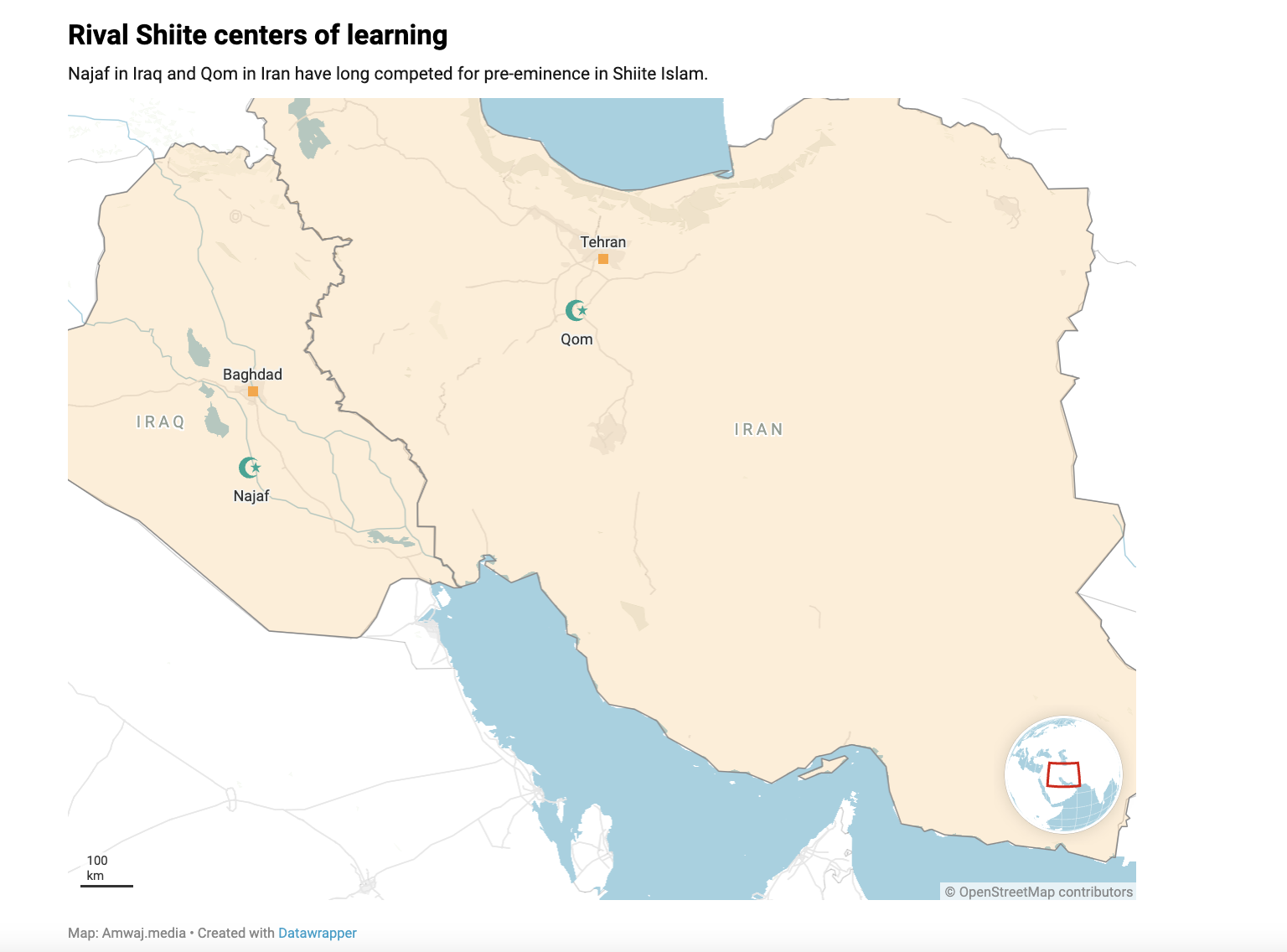
In parallel, the Shiite political ascendancy in Baghdad created new avenues for interaction. Clerics and leaders of armed groups in Iraq engaged with Houthis long before Iran's influence became the dominant explanation for such proximity. The Iraqi holy city of Najaf, the center of Twelver Shiite learning, became an early bridge. Despite theological differences between Twelvers and the Zaidi branch of Shiite Islam espoused by the Houthis, the symbolic resonance of Najaf for Zaidi religious identity—and its role as a hub for Iraq-linked clerical networks—facilitated an early connection between Iraqi Shiite circles and the Houthis. These historical links predate many of the more widely noted connections between Ansarullah and Iran. In fact, and uncharacteristically for their typically discreet presence outside Yemen such as in Iran or Lebanon, many Houthi leaders and members openly share photos of themselves in Najaf on social media.
Over time, these networks and shared sentiments have facilitated religious, political and strategic exchanges that helped solidify the Houthis’ position in the region—and the role of Iraqi actors in Yemen since 2003; at times independently, and at times on behalf of Iran.
Strategic depth and political alignment
The ties between Houthis and Iraqi Shiite factions have not been solely based on a common faith. The Yemeni group’s operational reach and political ambitions in many ways intersect with those of its Iraqi partners.
Following the American–led invasion of Iraq, Yemen became a destination for displaced Iraqi military personnel and Ba’athist officials, some of whom are believed to have later advised and trained Yemeni security forces. When the new authorities in Baghdad demanded the extradition of former Iraqi officials, then-Yemeni president Ali Abdullah Saleh (1990-2012) is reported to have refused. Both Iraqi and Yemeni officials privately say Saleh’s stance played a role in eventually paving the way for broader Iraqi support to the Houthis, including by permitting the group to establish a presence in Najaf starting in 2004.
Settling old scores, the Houthis reportedly sought out and executed Iraqi pilots who had fled to Yemen when Ansarullah seized Sana’a in 2014. Rashad Al-Alimi, the current head of Yemen’s Presidential Leadership Council (PLC) who served as interior minister (2001-8) during five of the six wars between Saleh and the Houthis, told this author that the Houthis also assassinated Iraqi pilots and advisors in Yemen during those conflicts.
Over the past decade or so, the relationships between Houthis and Iraqis have only been further strengthened. Abdul-Malik Al-Houthi, who has headed the Yemeni movement since the killing of his brother Hussein Al-Houthi in 2004, has so far appointed two special envoys to Iraq: Ahmad Al-Sharafi, and his predecessor Muhammad Al-Qibli.
Despite official denials, the Houthis reportedly maintain representational and charitable networks in Iraq that serve as logistical and financial conduits. Some Yemeni and western officials privately estimate that the annual support Ansarulllah receives from Iraqi actors is in the hundreds of millions of dollars. Notably, the US Treasury Department in Aug. 2025 warned Iraq’s Al-Rafidain Bank to stop processing payments on behalf of the Houthis.
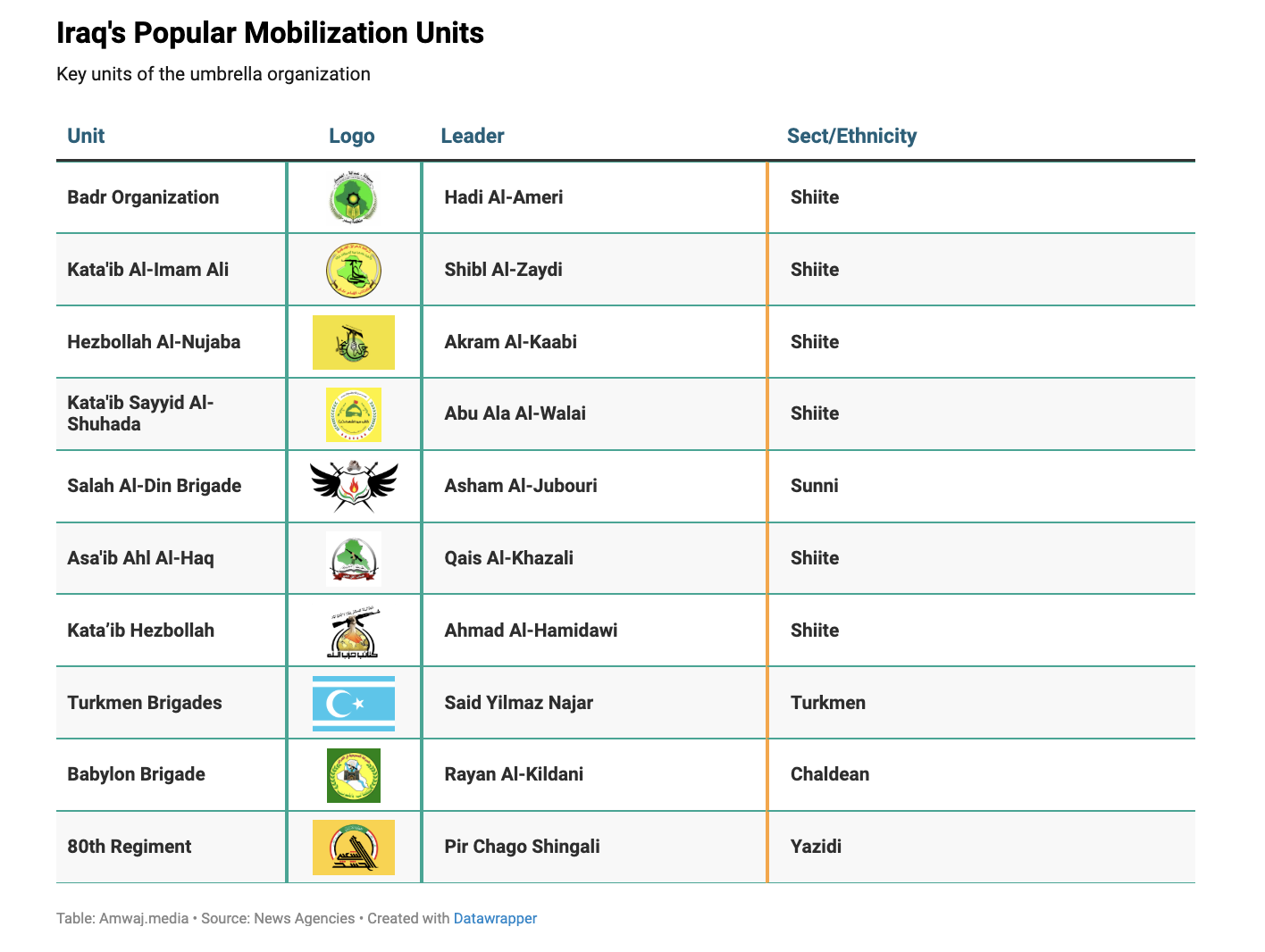
Iraqi Shiite armed groups, which are integrated into state-sanctioned structures like the Popular Mobilization Units, have also reportedly provided training and operational support, notably when Red Sea and Gulf tensions escalated in 2023-25. Furthermore, since the Mar. 2022 UN-mediated truce in Yemen, Iraq is believed to have served as a significant hub for the smuggling of Iranian fuel, gas and weapons to the Houthis via Iraqi and Yemeni ports. Houthi fighters are also claimed to be trained and hosted at a handful of military bases in Iraq run by Iran-backed Shiite armed groups. Notably, senior Houthi military leader Hussein Abdullah Mastour Al-Sha’bal was in July 2024 killed in a US airstrike on alleged drone facilities controlled by Kata’ib Hezbollah in the town of Jurf Al-Sakhar.
The killing of the Houthi commander was not an isolated incident. In June 2024, the month prior to the airstrike—and amid the Gaza war—the Houthis announced a coordinated attack on Israel jointly carried out with Iraqi groups. The operation followed a reported phone call between the Houthi leader and the head of Kata’ib Hezbollah in late May.
In the face of these relationships, successive Iraqi administrations have attempted a balancing act: managing ties with Iran, Saudi Arabia and the US as well as domestic factions while tolerating, if not quietly enabling, Houthi activity on Iraqi soil.
When Iran in 2021 sought to repatriate the body of its envoy to Sana’a, Hassan Irloo—an alleged member of the Islamic Revolutionary Guard Corps (IRGC)—Iraq’s then-premier Mustafa Al Kadhimi played a key role in arranging the evacuation. Kadhimi’s arrangement for the transfer, on an Iraqi plane with Saudi coordination at a time when tension between Riyadh and Tehran was running high, signaled Baghdad’s potential as a mediator despite its fraught internal politics. In a further indication of the complexity of relations, former Iraqi prime minister Adil Abdul Mahdi in 2024 appeared at a Houthi festival in Sana’a celebrating Quds (Jerusalem) Day.
Implications for regional politics
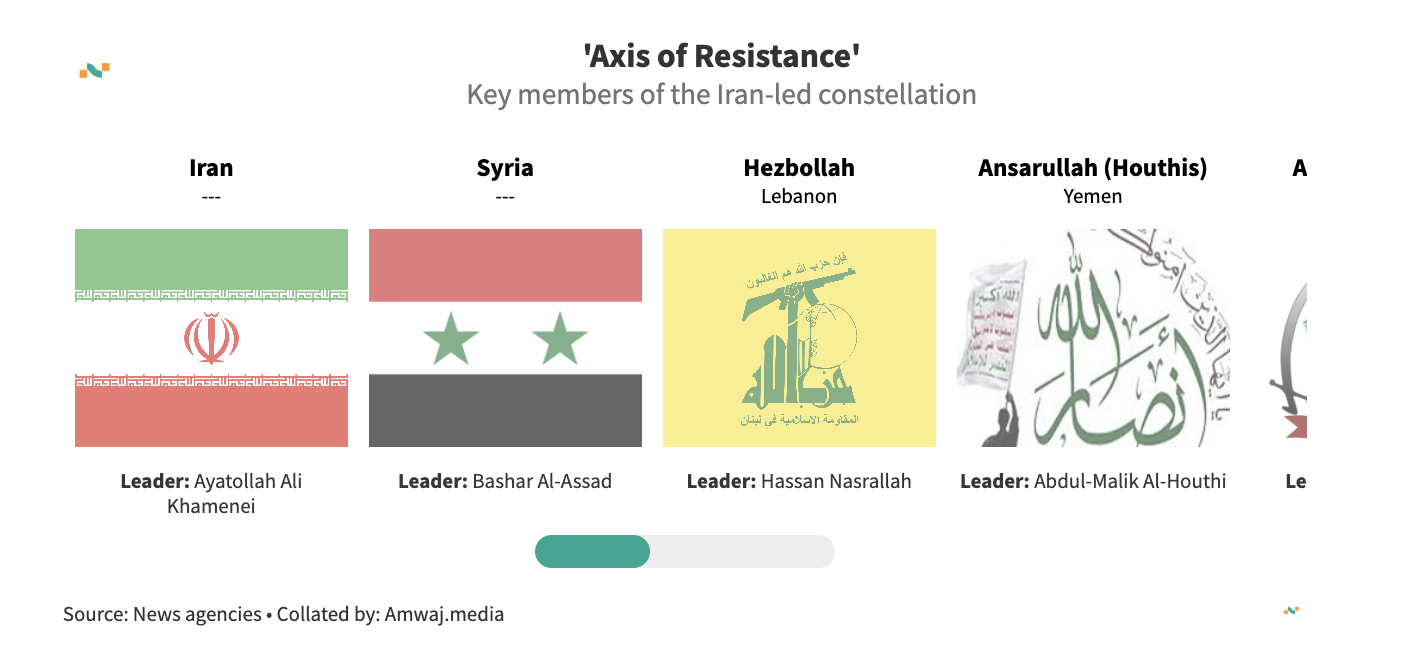
The relationships between the Houthis and Iraqi actors necessitate a reinterpretation of the challenge of how to approach the Yemeni group within the broader regional context. It is a stark reminder that despite their setbacks in recent years, members of the ‘Axis of Resistance’ retain an ability to navigate between Baghdad, Beirut, Sana’a and Tehran in addition to Gulf Arab capitals, highlighting their careful, deep and evasive network strategy. It also shows that the war in Yemen is a theater for wider regional contestation, not a standalone internal conflict.
More immediately, the strengthening of Houthi ties with Iraqi actors challenges claims by the US and regional governments that the movement has been isolated following its targeting of international shipping in ostensible solidarity with Palestinians in Gaza. Places like Iraq and Lebanon exemplify the broader public sympathy and support that Ansarullah has gained, with Houthi posters visible and a general awe for the Yemeni group felt in southern Beirut.
This growing public support in the region has given the Houthis a political cushion against diplomatic pressure, leading to increased recklessness and even arrogance toward any sustainable peace arrangement in Yemen. Within the Axis, such sentiments towards the Houthis have only intensified after Israel’s killing of Hezbollah leader Hassan Nasrallah in Sept 2024. A larger-than-life figure, Nasrallah was the effective Godfather of the Arab members of the Iran-led regional alliance network.
For Iraq, the incoming government in Baghdad faces a choice: to adopt a more active, stabilizing role that constrains Houthi activity on its soil and distances the country from regional conflict; or, to deepen tacit accommodation, further blurring the lines between domestic governance and transregional militancy. The exact meaning of the recent Emirati-Saudi rift in Yemen for Baghdad’s attempt to assert itself in regional and global politics also remains unclear.
Regardless, Iraq’s understated yet consequential role in the Houthis’ ascent exemplifies a recurring pattern in the region’s geopolitics: conflicts are interlinked not just through grand strategic alignments, but through overlapping networks of ideology, personal ties, history, changing loyalties, shared emotions as well as economic and strategic necessity. In sum, the Yemeni theater, long analyzed through the prism of Iran vs. Gulf Arab states, cannot be fully understood without recognizing how actors such as Iraqi groups have shaped and sustained pathways for Houthi influence, making it a central thread in the fabric of Arabian Peninsula and Gulf security dynamics.